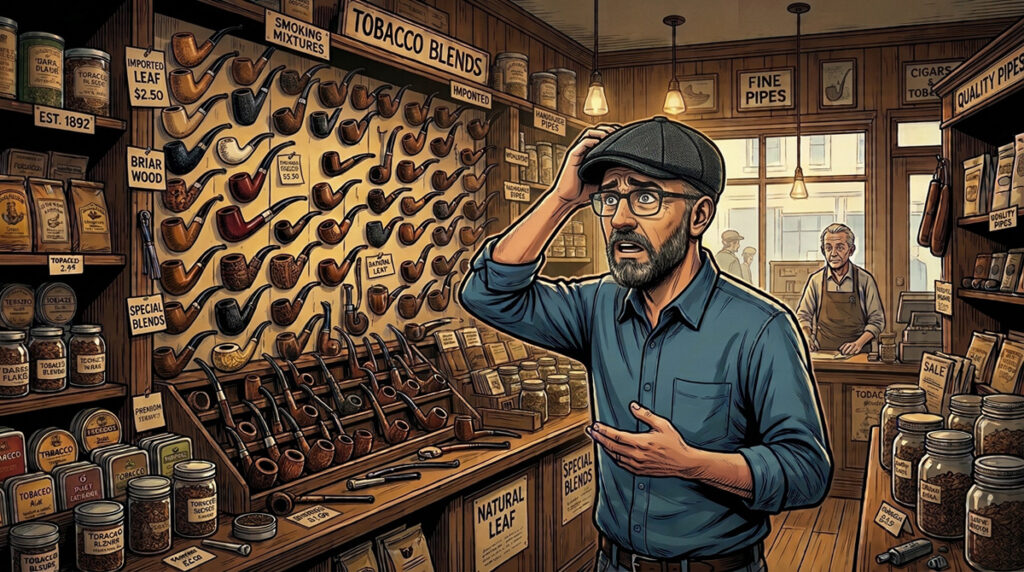
Walk into a tobacconist or browse the internet and you’re met with an overwhelming wall of options. Dozens of shapes, different materials and colors, and wide-ranging prices from the cost of a sandwich to the cost of a used car.
Don’t sweat it.
My first purchase was a 1954 Peterson Shamrock estate pipe. An “estate pipe” simply means a secondhand pipe. While some are unsmoked pieces from a previous collector, most have been smoked and then thoroughly cleaned, sanitized, and refurbished for a new owner. They’re often less expensive than new pipes.
1. Set a budget
Decide how much you want to spend before you shop. Remember, the pipe is only part of the bill. You will also want tobacco, pipe cleaners, a tamper or pipe tool, and a lighter or matches.
You can expect to spend at least $30-$100 for a complete beginner setup, depending on whether you choose a budget corncob pipe or an entry-level briar pipe.
Spending more does not guarantee a better smoke. A cheap pipe can be a very good one. However, the old saying is as true here as it is with almost anything else you buy: you get what you pay for.
2. Picking a shape
There are hundreds of shapes. Don’t try to learn them all. Start with one.
Billiard is the shape to know. It’s a straight pipe with a simple, cylindrical bowl, and a lot of other shapes are built from it. Make the bowl more stout and round, you have an “Apple” shape. Flare the bowl at the top and you have a “Dublin.”
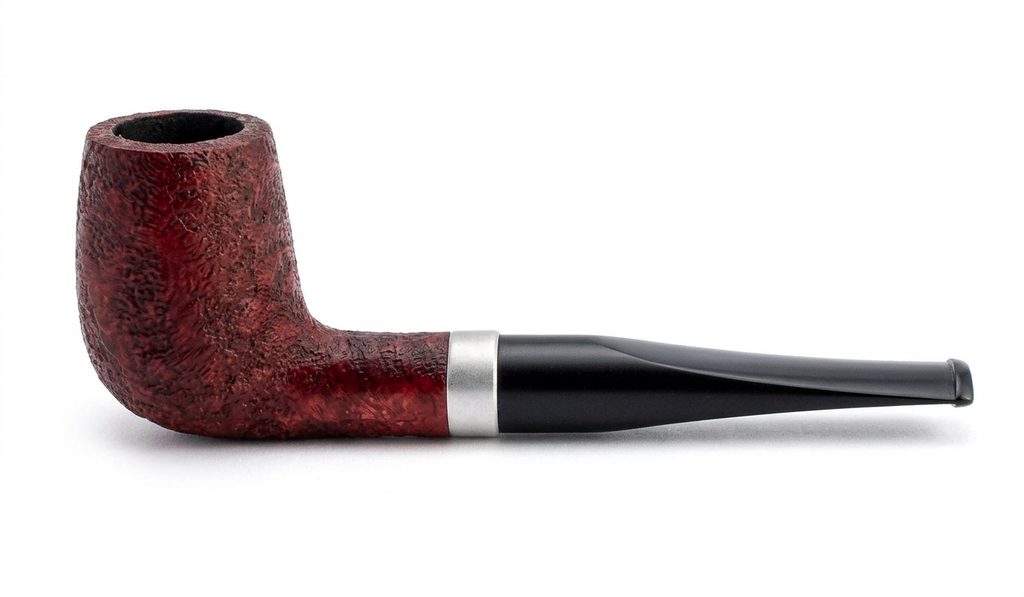
For a first pipe, billiards and their close relatives are the usual advice. Experienced users often recommend a straight, medium-sized pipe for beginners. That shape reduces condensation, a common headache when you are still learning technique.
A few other names you will see:
- Apple: a billiard with a rounded bowl.
- Dublin: a billiard with a bowl that flares out toward the top.
- Bulldog: a square shank and a tapered bowl rim.
- Bent: any shape with a curved stem. It hangs more naturally from your mouth, which some people find more comfortable when clenching the pipe between their teeth.
Don’t try to figure out all of the names. Pipe makers disagree on what to call things, and one brand’s apple is another’s ball.
3. Pipe materials
Three materials cover most of what you will see:
Corn cob is the cheap and cheerful option. Cobs are light, inexpensive, and ready to smoke straight out of the box. You can buy a cob, a pipe tool, cleaners, a lighter, and a couple of ounces of bulk tobacco for about what a decent entry-level briar costs. If money is tight, a cob is a perfectly respectable way in.
Briar is the standard. It’s the wood used for most pipes, and retailers tend to recommend it as the place to start. Briar pipes are durable and handle heat well, but do have a bit of a break-in period.
Meerschaum pipes are carved from sepiolite, a soft, white, heat-resistant mineral. They often feature intricate carvings and deliver an exceptionally cool smoke, but they are also expensive. Because meerschaum pipes are fragile and require strict maintenance, they are too unforgiving for beginners who are still learning the basics of pipe smoking.
4. Stem materials
The stem, or mouthpiece, is the part that sits in your teeth. The most common are vulcanite (also called ebonite, a hardened rubber) and acrylic.
Most artisan makers use vulcanite. It is softer in the teeth than acrylic and more popular. Opinions on how much it matters vary. Some smokers prefer vulcanite for comfort. Others say the difference in the mouth is subtle and stopped noticing it.
You will also see a choice between filtered and unfiltered pipes. Filters come in two standard sizes: 6mm and 9mm. Filers are a personal choice that you won’t know until you’ve tried both. The largest pipe manufacturers take different approaches. Most Peterson pipes are unfiltered, while Savinelli pipes tend to be filtered.
5. The shortlist
- Budget: set it first, and leave room for tobacco and tools.
- Shape: a billiard or close relative, straight or bent.
- Material: briar for the standard route, cob if you want cheap and easy.
- Stem: vulcanite or acrylic. Try both when you can.
- Filter: yes or no.
Here’s the part nobody puts in the spec sheet: the best pipe for you is whichever one appeals to you most. If you like how it looks and feels in your hand, you are more likely to pick it up.
And don’t agonize. Your first pipe is probably not your last pipe.
If you can, find someone who smokes a pipe and ask for a few minutes of their time. An experienced mentor matters more than which pipe you start with.